
BAI participates in IC2 Santander with a presentation on the M-Zero workshop

BAI participated in the 1st Congress on Innovation in Construction, Building, Infrastructure and Concessions (IC2), held from June 1 to 5, 2026, at the Palacio de la Magdalena in Santander. The event brought together professionals, companies, universities, technology centers, and institutions linked to the future of construction, with the aim of addressing the sector’s main challenges around industrialization, sustainability, digitalization, technological innovation, and new models of collaboration between research, industry, and professional practice.
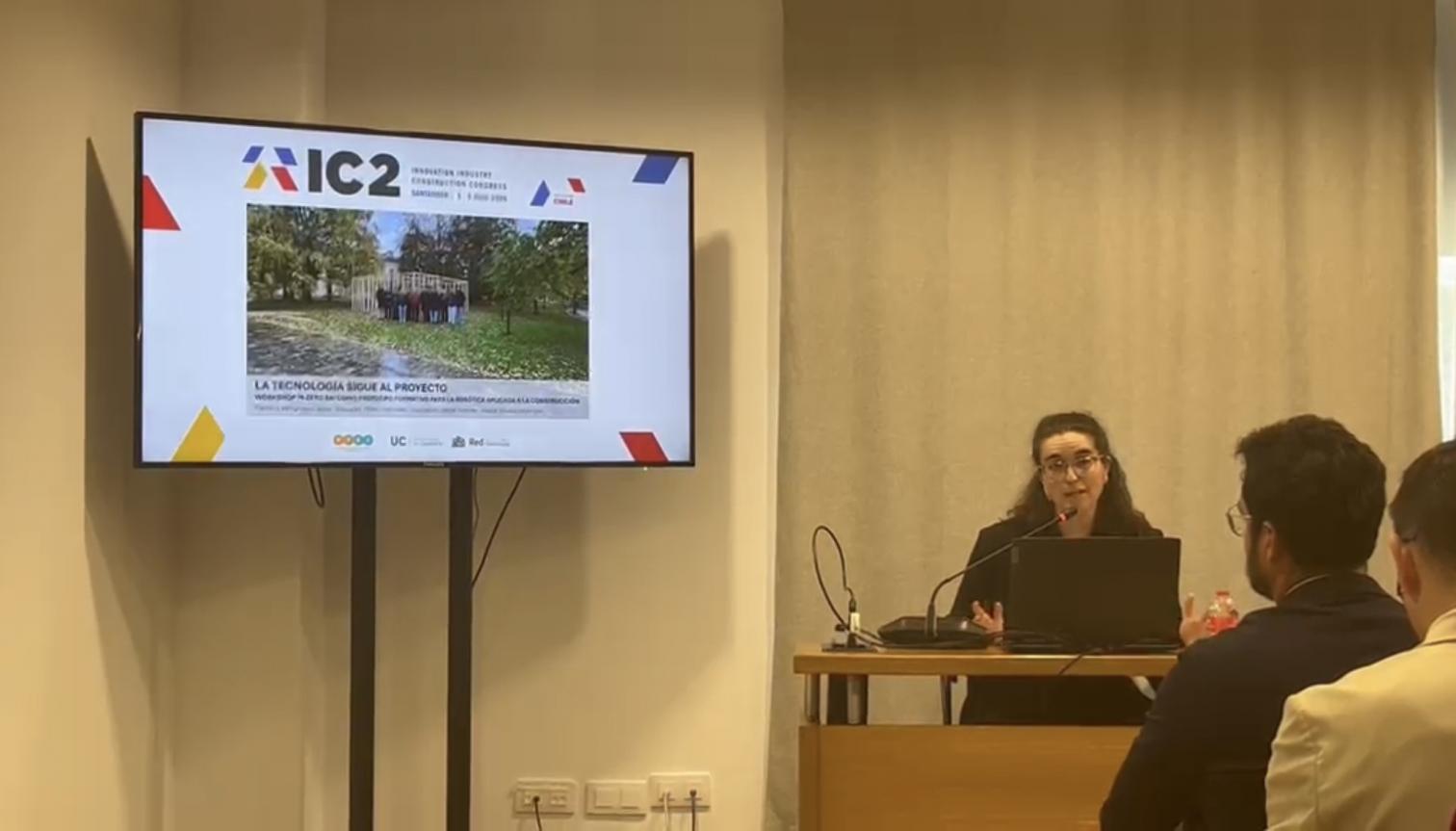
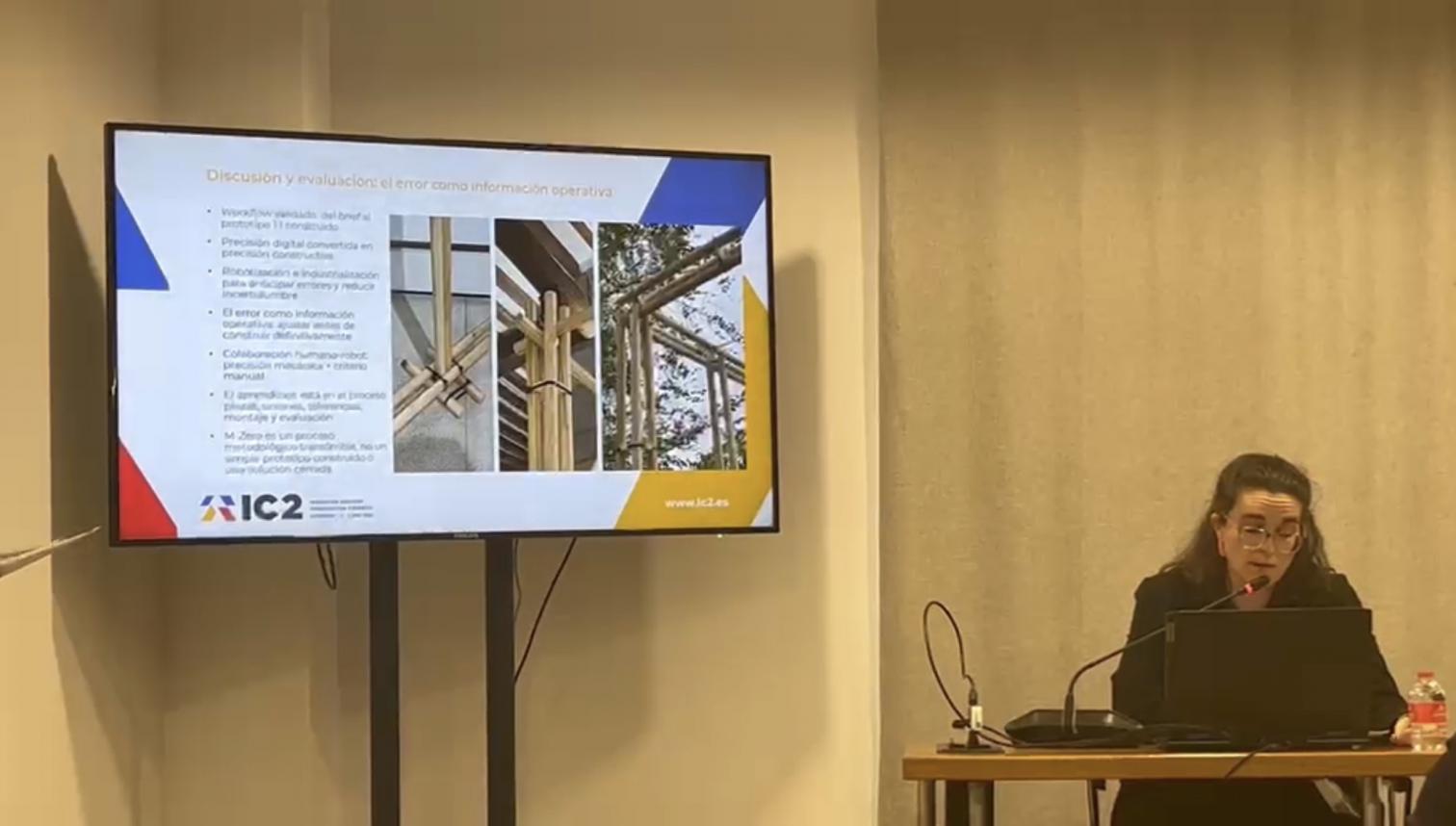
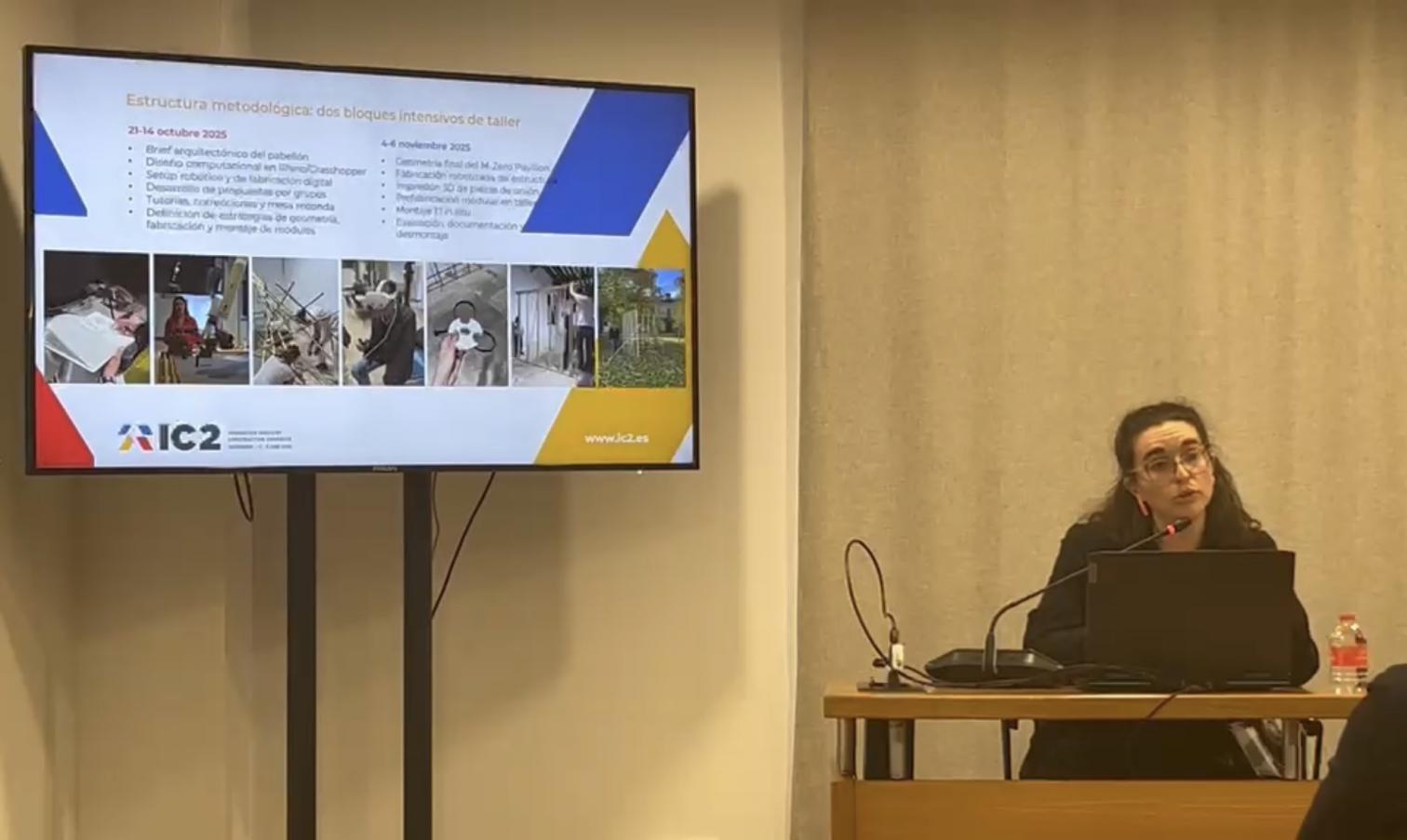
Within this framework, Patricia Minguito delivered a presentation in which she presented the operational workflow of the M-Zero workshop, the first pilot workshop developed by BAI around digital fabrication, timber construction, 3D printing, virtual reality, and manual assembly as integrated tools within an advanced architectural learning process. The paper was also co-authored by Eduardo Prieto, Fernando Moral, and Marta Silvero, who also attended the congress representing the institute.
The paper was presented within the panel “Application of Robotics in Construction (II),” which brought together different approaches to the incorporation of robotics and automation in the sector. The session allowed BAI’s educational experience to be placed in dialogue with other applied perspectives, such as robotic underground construction presented by Antonio Baamonde Roca (COPASA); façade automation presented by Santiago Martínez de la Casa Díaz (Universidad Carlos III de Madrid); autonomous robotics and intelligent orchestration addressed by Eduardo Chamorro (TECNALIA Research & Innovation) and Ángel C. Lázaro Ríos (GMV); and the digital twin of the O Corgo viaduct presented by Juan Pérez Canga (WSP Spain). Within this context, BAI’s contribution introduced a specifically methodological and pedagogical perspective on the integration of these technologies into contemporary architecture and construction.
The presentation allowed the M-Zero experience to be shared as a particularly representative case study of BAI’s methodology: a training approach based on direct contact between design, technology, materiality, fabrication, and real construction. Developed as an intensive experimental workshop, M-Zero invited students to work on a lightweight timber structure through a complete process integrating computational design, immersive visualization, robotic fabrication, 3D printing of components, and collective assembly. Through this experience, BAI showcased at IC2 its commitment to an architectural education capable of connecting design thinking, technical culture, and applied innovation. M-Zero was not conceived solely as an academic exercise, but as a pedagogical prototype aimed at testing new relationships between architecture, industry, and construction. The process enabled participants to understand how digital tools and advanced manufacturing systems can be incorporated into architectural design without losing sight of material precision, construction logic, and the collaborative dimension of work.
BAI’s participation in IC2 reinforces the institute’s presence in key forums on the future of construction and consolidates its role as a reference center in the industrialization, robotics, and innovation of architecture and construction. In a congress focused on promoting knowledge transfer between universities, companies, public administrations, and industry, the presentation delivered by Patricia Minguito helped position BAI’s experience within a broader conversation on new professional profiles, emerging teaching methodologies, and the competencies required to transform the sector.
With this participation, BAI continues to advance its commitment to specialized, experimental training connected to the real challenges of contemporary architecture, understanding innovation not only as technological incorporation, but as a new way of thinking, designing, and building.